Challenge
“Let anyone, anywhere, instantly chat with an expert in virtually any field.”
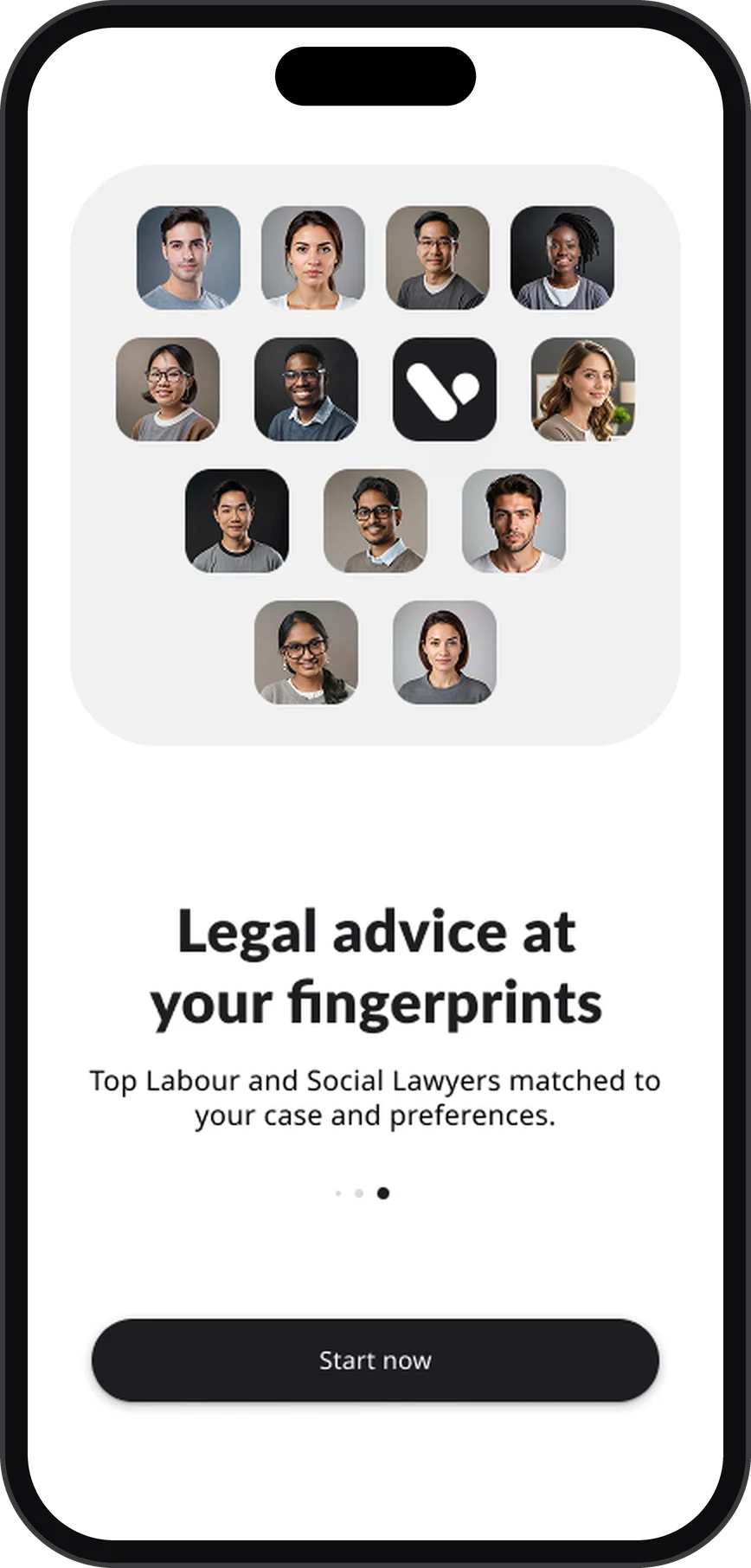
That was the brief. It sounds simple until you ask the next question. Expert in what? Trusted by whom? Affordable for whom?
I treated the brief as a hypothesis to test, not a spec to build.
- Users
- People facing a sudden legal problem, no legal background
- Timeline
- 2 months, from research to tested prototype
- Worked with
- CareerFoundry mentor, a labour and social law attorney
Research
The premise held. The scope didn’t.
Before designing anything, I checked where people look for expert help today, who they trust, and what stops them.
Survey
21 responses on where people look for expert help and who they trust.
Interviews
3 in-depth conversations on motivations, frustrations and real behavior.
Expert interview
1 labour and social law attorney, on what clients bring and what they really need.
Market scan
Existing expert-advice and legal platforms, and where they fall short.
The survey showed people already look for help online, and pay for it. The gap is finding someone credible, fast.
Narrowing
Serving everyone meant serving no one well.
The open question was who, not whether. The research narrowed the brief in three steps.
Step 1Lawyers
Lawyers ranked first for trust by a wide margin. They also scored highest on urgency of need and willingness to pay, the two things a paid platform depends on.
Step 2Labour & social law
“Lawyer” is still too broad. I interviewed a labour and social law attorney. Two answers settled it.
QWhat do people bring to you most often?
Job termination, salary irregularities, workplace harassment and discrimination.
QCould some of these be resolved without full representation?
Yes. Many need clear expert guidance, not a court case.
Urgent, emotional, and often solvable with one good conversation. That’s the gap a fast, trustworthy app can fill.
Step 3Germany first
One legal system and one set of rights meant the matching could be specific. Prove it there, then scale.
The moment
She didn't expect to need a lawyer. Until Monday.
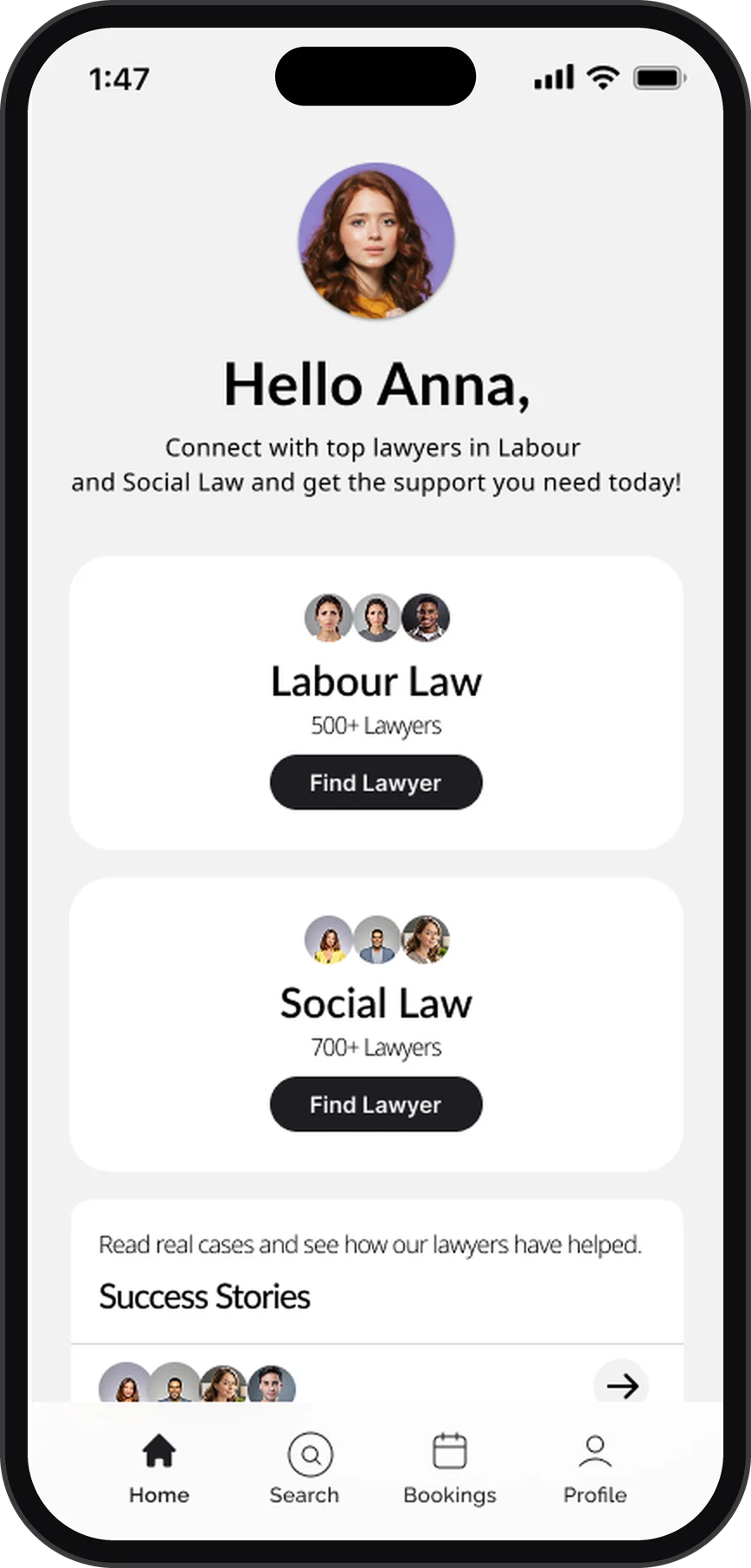
Anna, 32, works in marketing in Berlin. Her boss calls her into a meeting. No warning, no notice. Just: “We’re letting you go.”
She searches online and finds conflicting articles, legal jargon and consultation fees she can't judge. She isn't looking for a law firm. She wants someone to explain her rights. Now.
Anna is a proto-persona built from the three interviews.
Three pains, in their words
Cost
Traditional services are expensive, intimidating, and take too long.
Rebecca, 30
Trust
Nowadays everyone's an expert online. I need someone I can trust.
Roman, 34
Time
I want quick, clear advice. No long phone calls or extensive googling.
Maxim, 26
Three questions
Each pain became one question, and each question became one part of the app.
01 · CaseDescribe it
How might we help people define their legal case without knowing legal terms?
02 · MatchTrust it
How might we show the right expert, not just any available one?
03 · BookAct on it
How might we turn a match into a booked session in a few taps?
Design
Case, match, book. The app does the legal translation, so the user only has to say what happened.
A steps screen shows the whole journey up front and ticks off each part, so nobody wonders how much is left.
- Pick labour or social law
- Your case
- Your preferences
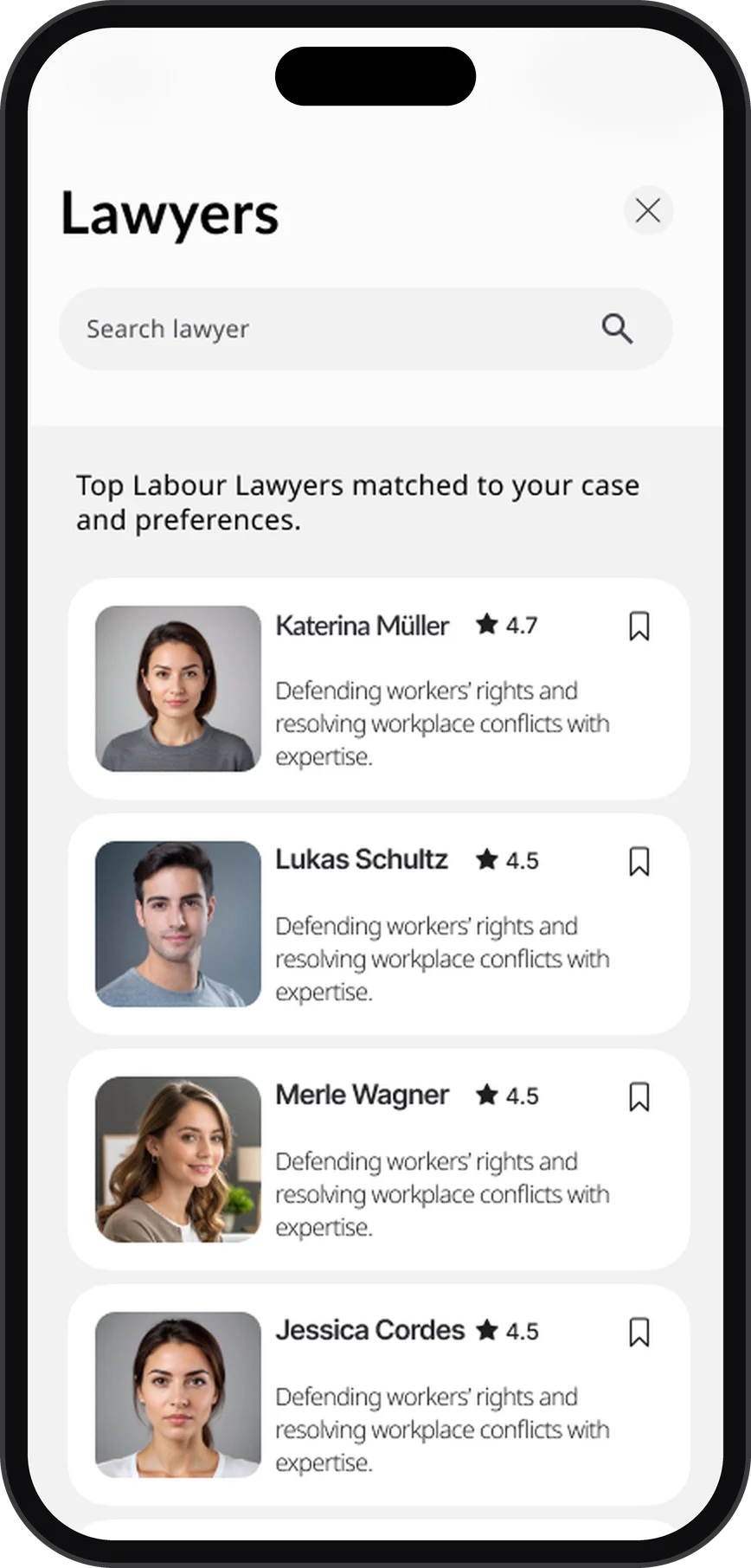
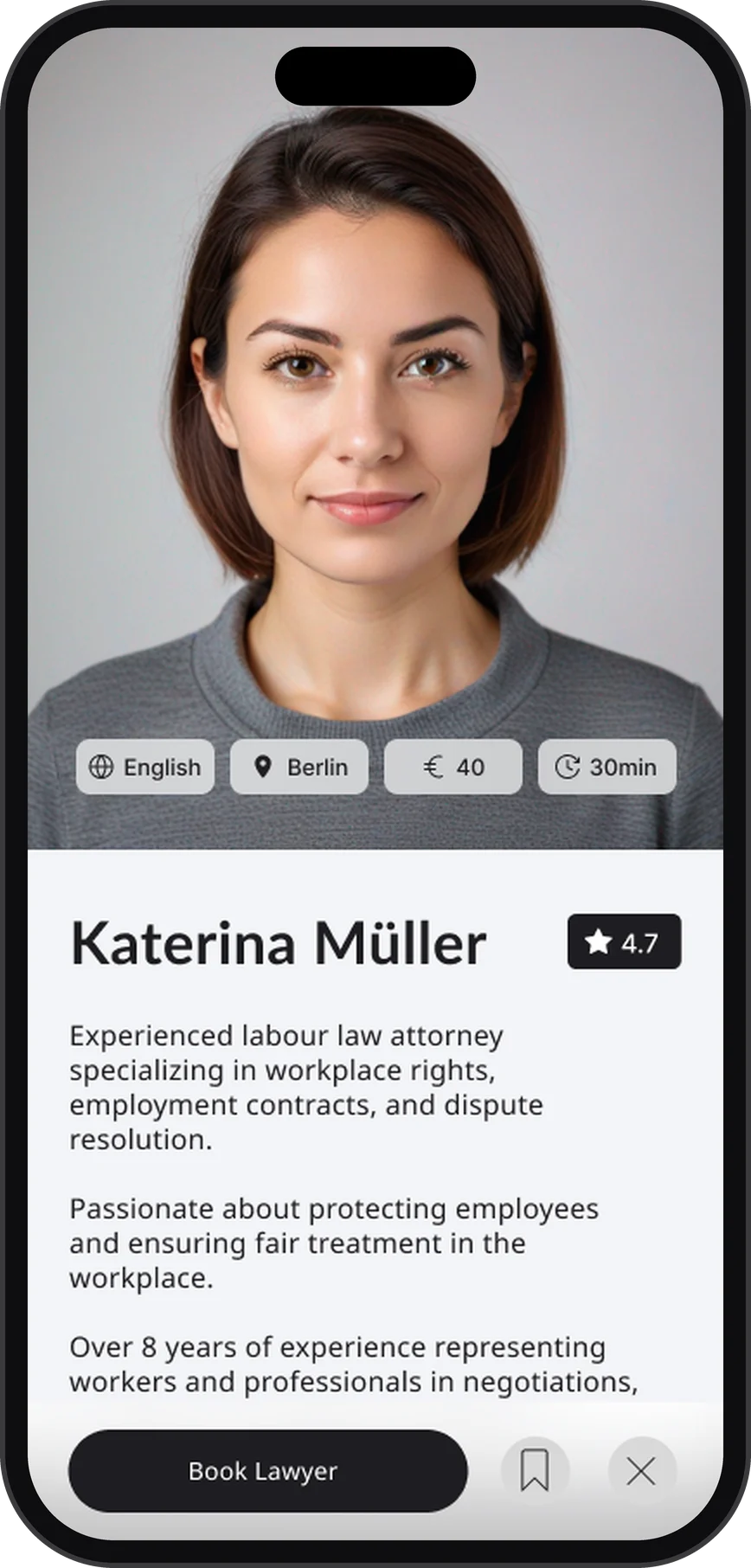
- Matched lawyersCase type
Language
Budget & timing - Lawyer profile
- Book & pay
- Upload & session
Your case: what happened, which document arrived and when. One question per screen, everyday words, no legal terms.
Trade-off
The brief asked for instant chat. I added steps before contact.
An open chat is fast, but it connects you to whoever is online. In labour law, the wrong first answer costs more than a short wait. In Germany, you have three weeks to challenge a dismissal.
Right expert
Case type and preferences filter by focus area, language and budget before a single profile appears.
Structure calms
One question per screen lets people say what happened in their own words. The app turns that into a case a lawyer can work with.
Better first call
The lawyer sees the case before the session, including when the termination letter arrived. The deadline is clear before anyone says hello.
The cost
Slower first contact, and drop-off risk for someone already stressed. To soften it: one question per screen, progress always visible, the free-text description can be skipped, and an “in the next hour” option for anyone who can’t wait.
Testing
Five people, one task: book a lawyer. They clicked through the prototype while I watched. Two moments made them stop and hesitate. Both fixes changed the structure of the flow.
- Pick labour or social law
- 01Terms & data policy
- Your case
- Your preferences
- Matched lawyers
- Lawyer profile
- Book
- 02Services overview
- Pay
- Upload & session
01 · Before the caseWhat happens to my data?
People were about to describe a dismissal and upload private documents, with no word on how that data is handled. I added terms of service and a data policy to accept before the case starts. One more step, placed where the private part begins.
02 · Between booking and paymentWhat am I paying for?
A match and a price weren't enough. Testers couldn't tell what the lawyer would actually do. I added a services overview before payment (first consultation, document review, case strategy) and an opt-in for an emailed invoice.
System
Calm by default. One color for moving forward.
Legal issues arrive with stress, so the UI stays quiet. Soft neutrals carry the content, charcoal marks the primary action, and a single blue is reserved for progress and selection. The eye always knows where it is and what comes next.
A small component library (cards, buttons, forms, progress, navigation) kept every step of the flow familiar. Lato for headings, Raleway for body.
Next time
This was a concept, not a launch, so there are no outcomes to report. Here's what I'd do differently, and what I'd measure.
Validate the niche
I chose labour law from one attorney interview and survey trends. Next time I'd talk to people who have actually lost a job before designing a screen.
Answer first, book second
Many cases start with one question: what are my deadlines? A short free first answer could earn trust before asking anyone to pay.
Measure the cost
Completion per intake step and time to first contact. That shows whether the extra steps earn their place.